Keep the Tree, Lose the Problem
Not every problem tree needs to come down, and the one by the curb is not yours to cut.
Why Trim Instead of Remove
Start with the rule that catches Battle Creek, Michigan homeowners: the maple in the curb lawn, between sidewalk and street, is a public tree. Pruning it without a Department of Public Works permit is a civil infraction under § 1026.04, so for that tree we send you to the DPW.
Your own street-side trees carry a duty under § 1026.09: 15 feet of clearance over the street and sidewalk, clear of street lights and sight lines, with dead limbs removed. On a corner lot, branches in the 25-foot sight triangle rise to 10 feet and shrubs stay under 30 inches. Skip it and the DPW gives 14 days' notice, then trims and bills you.
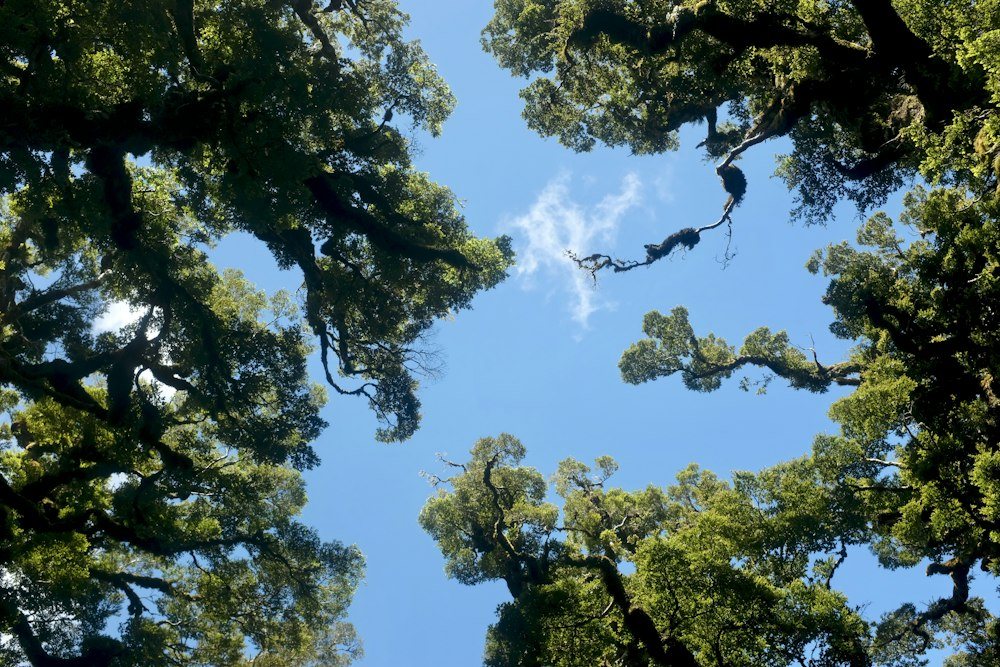
So many “take it down” calls end as a crown raise or a deadwooding instead. The maples and oaks near Leila Arboretum and toward Goguac Lake are worth keeping. We never top a tree; a stubbed crown sprouts weak shoots that snap in the next storm.
Where We Work
Trimming reaches every town our removal crew does. The curb-lawn rules above are Battle Creek's; Springfield, Marshall, Albion, the villages and the townships keep their own. See all the areas we serve →
We lift silver maple, sugar maple and basswood canopies off the roof, gutters and drive. Wet maple leaves packed in a valley hold water into the freeze, so this can spare a roofing bill, and it meets the 15 feet the city asks for.
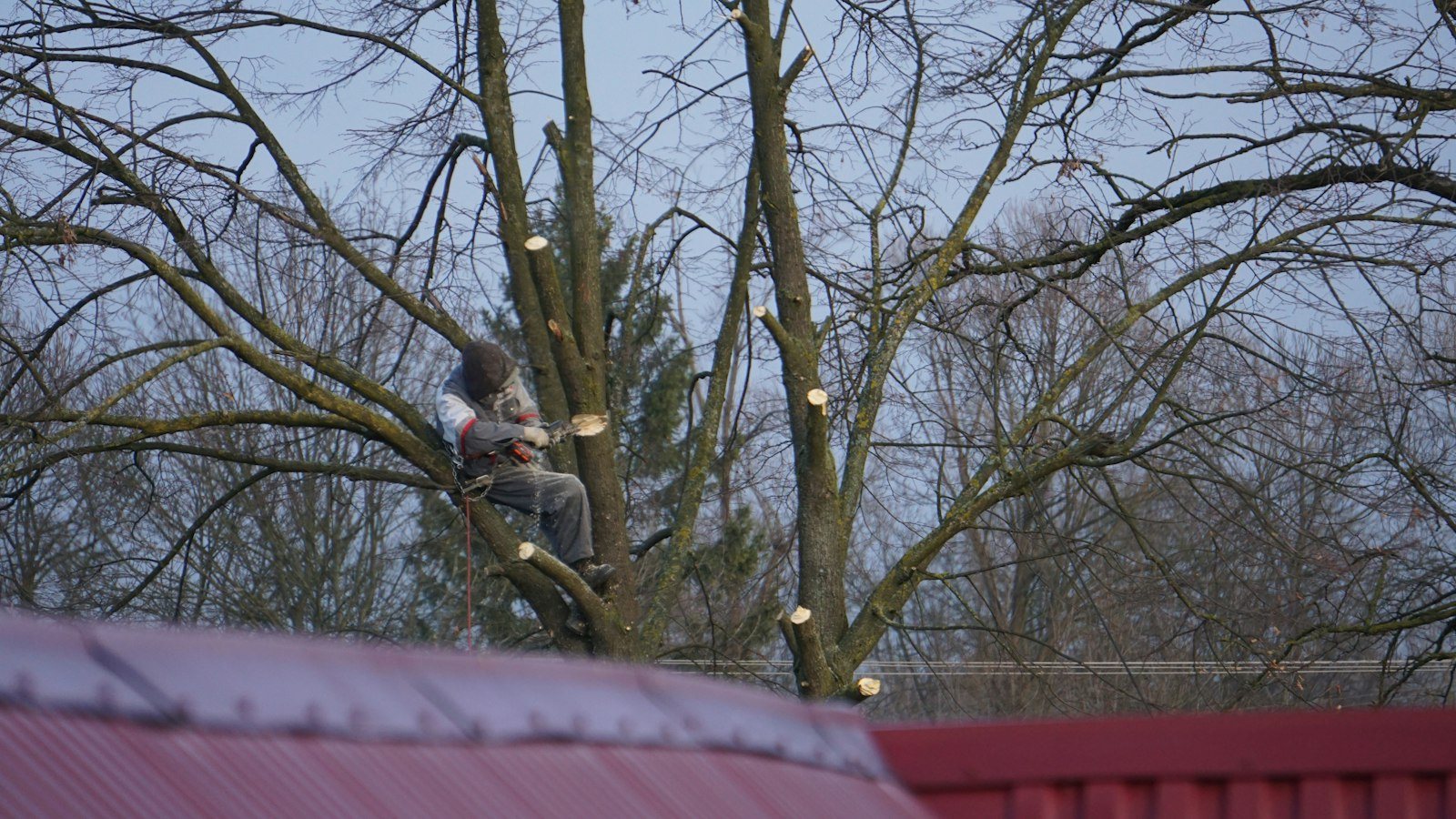
Dead, cracked or hanging limbs come out before they fall, most often from silver maple and box elder, which drop heavy limbs on still afternoons after a wet week. Ice-storm hangers and dead ash tops too. Try the Tree Diagnosis tool.
Thinning lets wind through the crown, and shortening end-heavy limbs removes the lever. The city bans silver maple and box elder from the curb lawn (§ 1026.02), yet both line older blocks; late-winter thinning beats a cleanup after a derecho.
Cost Planning
| Job | Typical cost range |
|---|---|
| Small tree | $250–$450 |
| Medium tree | $450–$800 |
| Large tree | $800–$1,500 |
| Hazard-limb removal (single limb) | $150–$400 |
Ranges are typical for southwest Michigan based on published industry cost guides; your written estimate reflects your specific tree and site.
Scope moves the price more than height: three limbs off a garage is not a full deadwooding of a 70-foot red oak. A fenced back-corner maple gets climbed instead of reached from the bucket, and takes longer. Every job gets a free, written estimate before any work starts.
How It Works
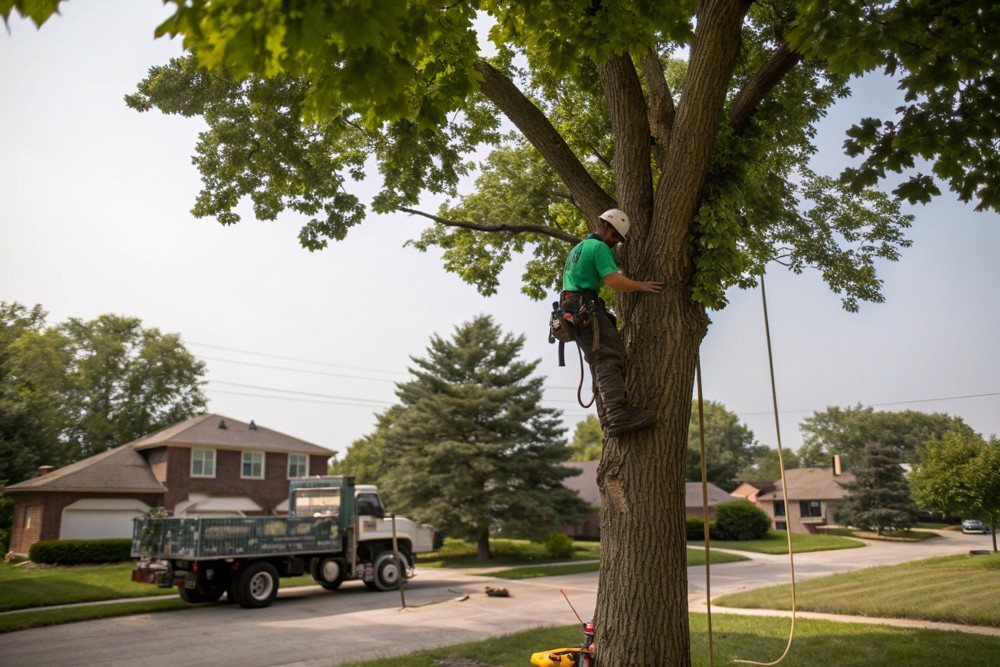
Trouble in certain branches (deadwood, one storm-hit side, a limb over the roof) usually means a trim. A cracked trunk, a changing lean or a crown dying from the top usually means removal, especially for bare-topped ash. See our tree removal service.
Late winter, while maples and oaks are dormant and before sap runs, is safest for heavy pruning. Finish storm-prep thinning by early spring, before the June and July storm peak, and skip oak pruning in the growing season to keep oak wilt out. Hazard limbs come off in any month.
Not for a tree wholly on your own lot. A curb-lawn or right-of-way tree needs a DPW permit (§ 1026.04), your street-side trees must stay 15 feet clear (§ 1026.09), and paid crews need the City license (§ 860.01). Our permits guide has the rest.
Get a free, honest on-site assessment.
Type your town or ZIP and see whether the Cereal City crew drives out to you.